Generator start-up surge fix
Traced a start-up surge on new Cummins generators to a resonance between the throttle controller and its mounting bracket, then fixed it in the field and at the factory.
- For
- Cummins Power Generation
- Context
- APAC PowerGen, Carole Park, Brisbane
- My role
- Junior Divisional Service Field Engineer, APAC excluding WA
- Year
- 2023–2024
- Region
- Asia Pacific, excluding Western Australia
- Reported to
- Service Engineering Manager, Cummins Asia Pacific
- Methods
- FMEA, 8D, Lean Six Sigma
- Tools
- FMEA, 8D, Lean Six Sigma, Autodesk Inventor, FDM printing
Role
Cummins builds diesel and gas generator sets for standby and prime power. As a Divisional Service Field Engineer for Asia Pacific, the role sat between the field and the factory: service teams reported faults, and the job was to establish the real cause and make sure the fix reached both the units already in service and the product itself.
- Diagnose. Traced mechanical and electrical faults across the generator range, from service reports through to the failed components.
- Find the root cause. Ran structured root cause analysis with FMEA and 8D, so each fix addressed the cause rather than the symptom.
- Test. Planned tests with design, electrical and manufacturing engineering teams to confirm a cause before committing to a change.
- Close the loop. Wrote field feedback reports and corrective action plans.
Problem
Mid-size generators fitted with a newly introduced Sedemac throttle actuator controller began surging on start-up. The fault was reported by service technicians across the region, with the units remote from Brisbane.
Analysis
Working with technicians remotely and then through the distribution centre, the surge was traced to a resonance. The controller’s default PID set points drove the actuator arm at a frequency close to the natural frequency of its steel mounting bracket, a long cantilever off the engine block. At those settings the arm vibrated back and forth and the engine speed hunted.
Three corrective options came out of the analysis:
- Retune the controller. Move the PID set points out of the resonant range while keeping throttle response and start-up time within specification. This needs a reprogramming cable, so I built one.
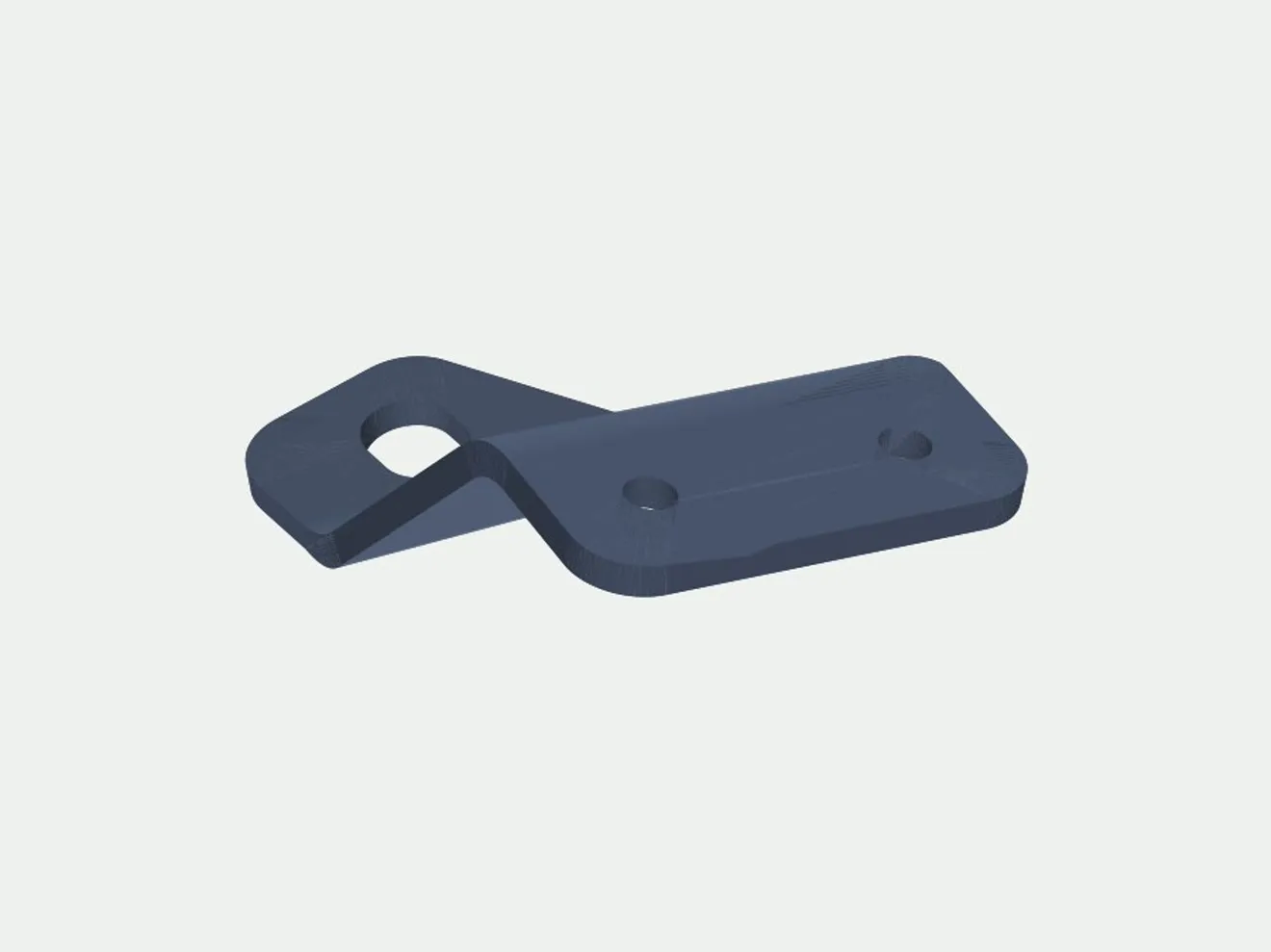
- Stiffen the bracket. Add a second steel bracket to the cantilever arm to raise its natural frequency away from the controller’s.
- Change the factory default. Have the factory ship the controller with revised set points.
Design
Option 3 fixed the cause at the lowest cost, so it became the permanent fix. Units already in the field still needed a solution, and reprogramming cables were slow and hard to obtain, so the field fix depended on each branch:
- Branches without a cable received stiffening brackets, made locally in Brisbane to my design.
- Branches with a cable were talked through updating the PID set points over the phone.
- Units not yet shipped were reprogrammed before dispatch.
- New units left the factory with updated default set points, verified free of surging.
3D model loads when you scroll here.
The stiffening bracket, third revision. A single bent plate with a joggle that steps the mounting face down.