DSLR film scanning system
Started as a stand for my own negatives and grew into a complete scanning kit. More than 1,000 units sold, about 500 of them full kits.
- For
- My own business
- Context
- Designed, made and sold online through Shopify and Etsy
- My role
- Founder, product designer and manufacturer
- Year
- 2022–2025
- Sold
- 1,000+ units, about 500 full kits
- Film formats
- 35 mm, 6×4.5, 6×6, 6×7 and 6×9
- Tools
- Fusion 360, SolidWorks, Klipper firmware, PrusaSlicer, Shopify, Etsy
Problem
Film photography is back, but getting negatives into digital form is still awkward. Photographing negatives with a digital camera works well, but the equipment on the market was priced well beyond what it did. With a 3D printer and a home workshop, a better-value version could be designed and built in-house.
The kit began as a tool for my own film and became a complete system that any photographer with a DSLR or mirrorless camera could use out of the box.
Design
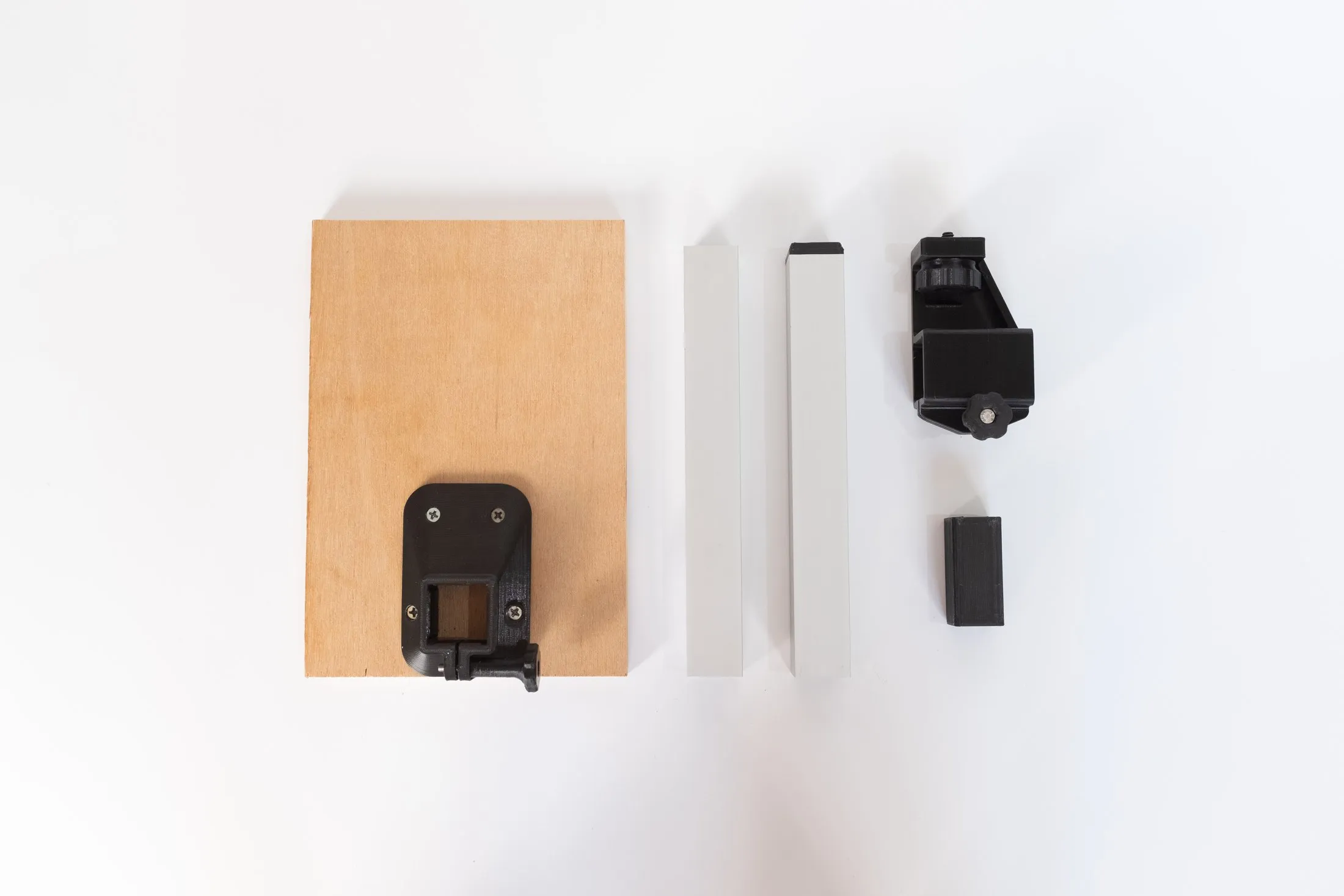
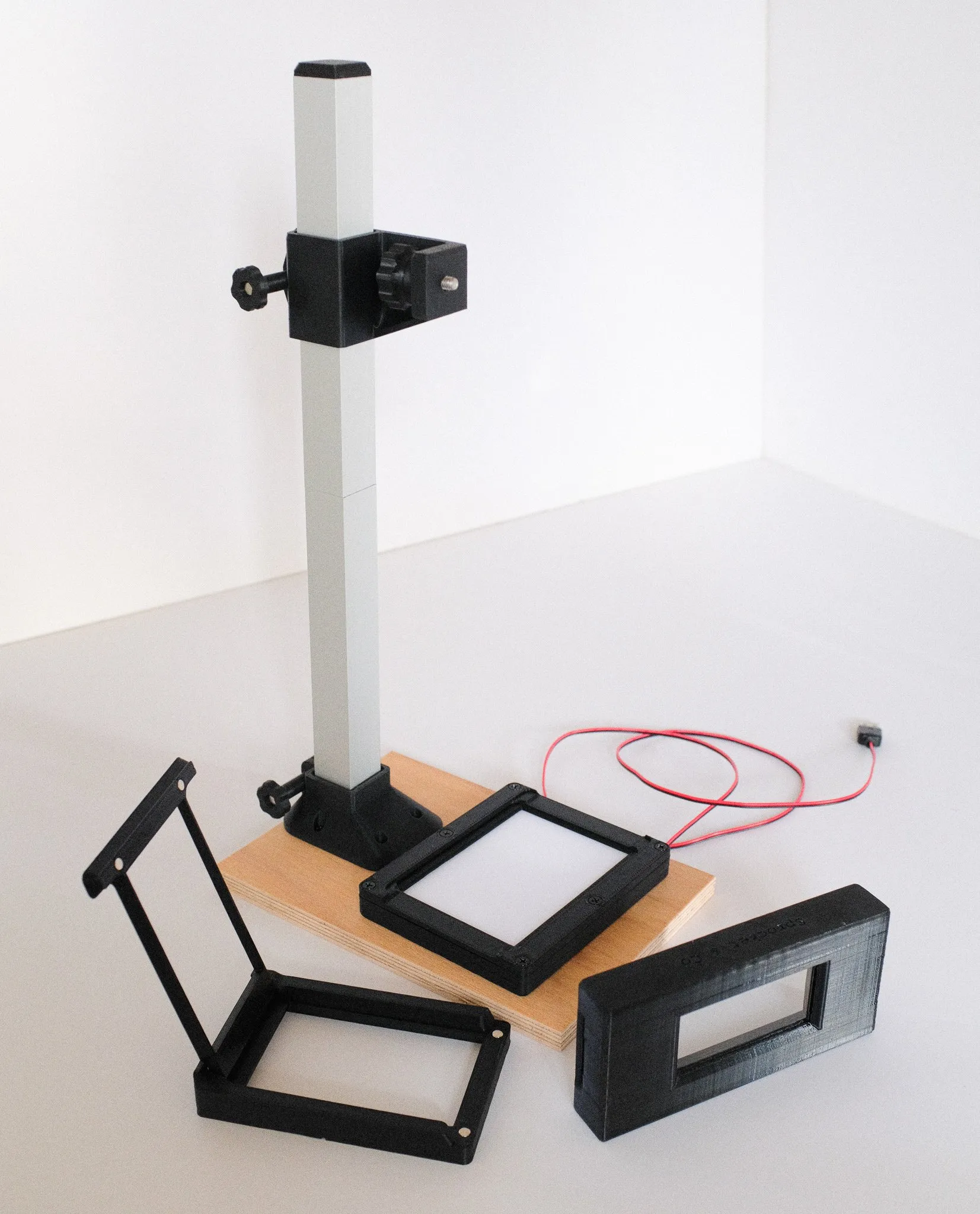
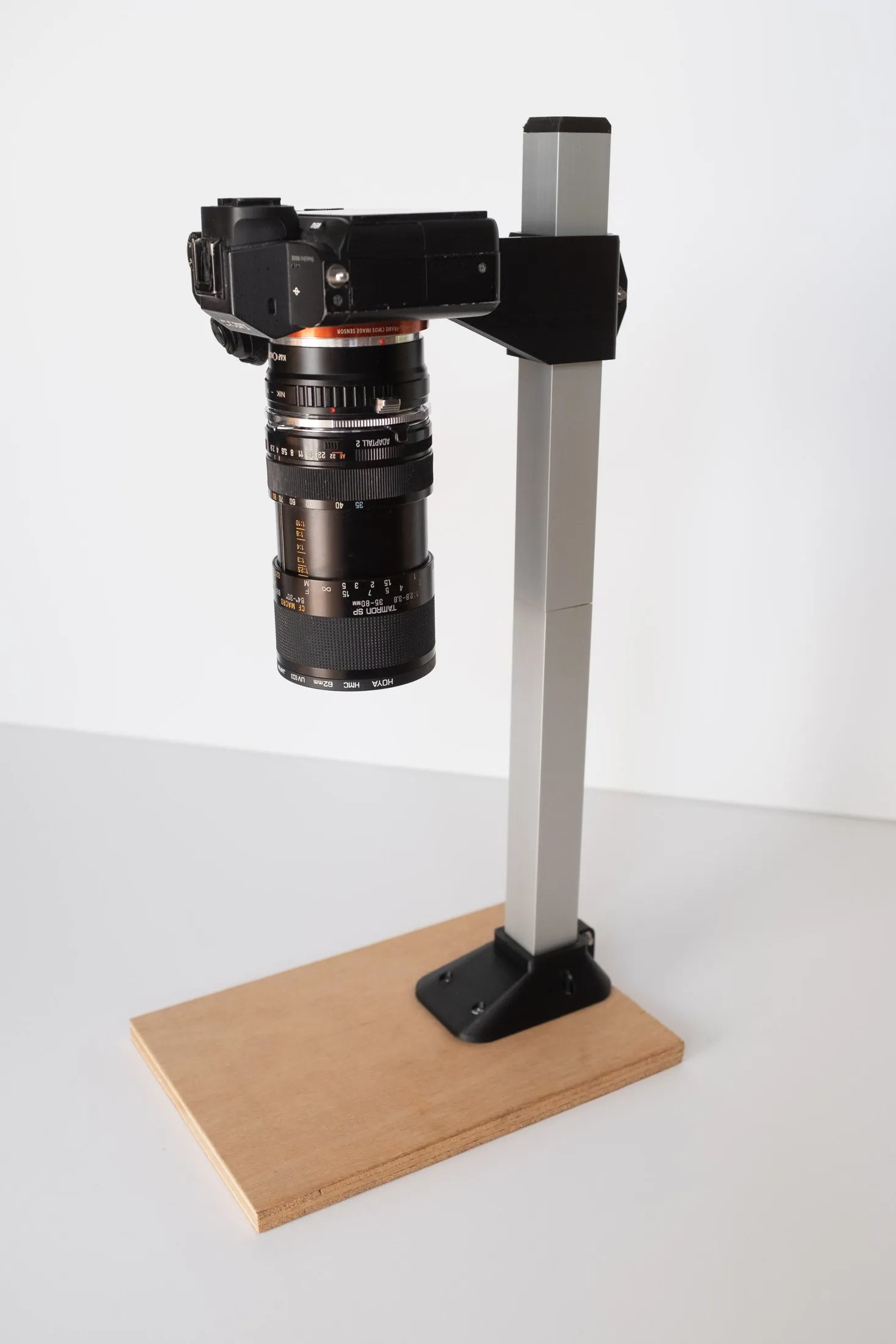
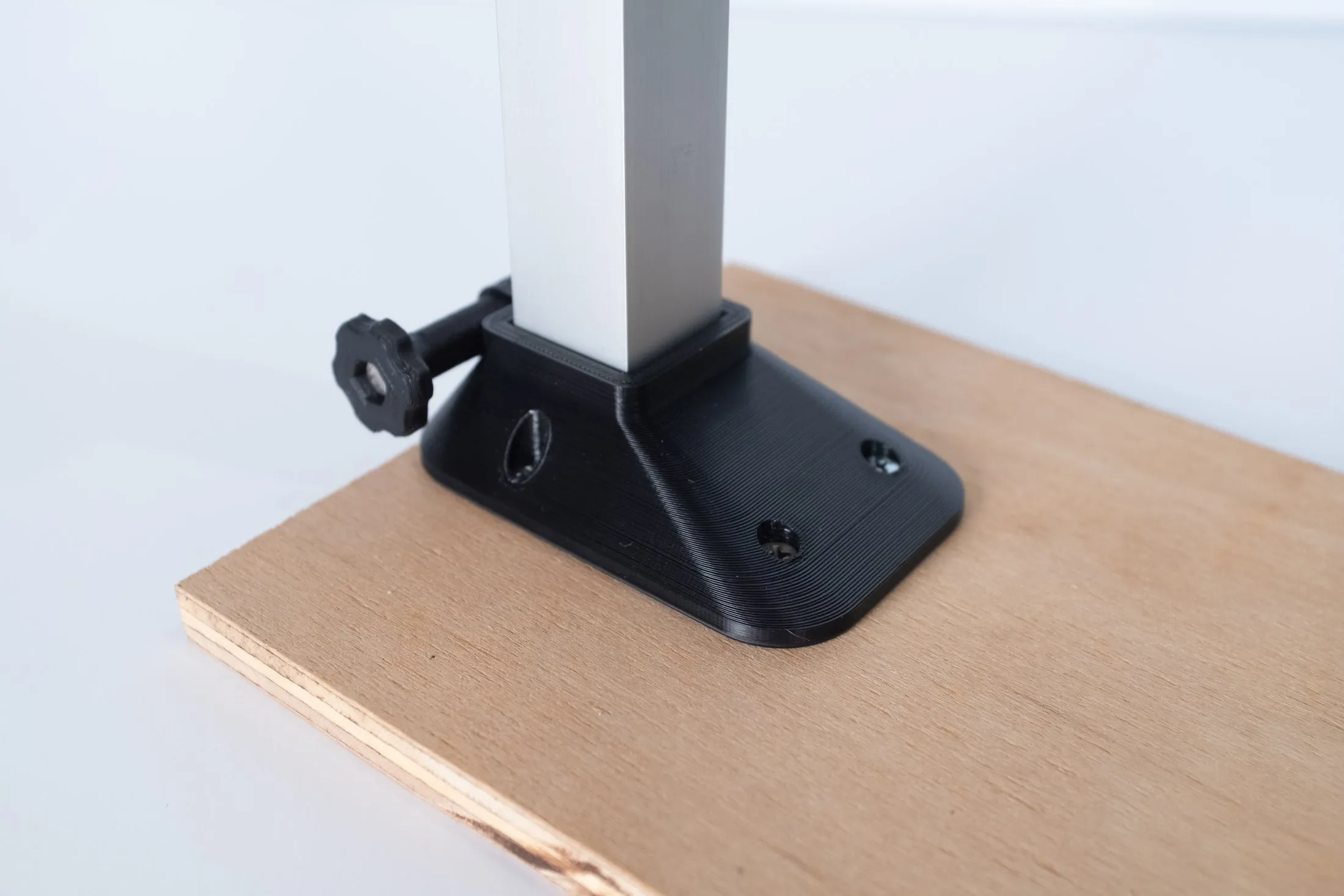
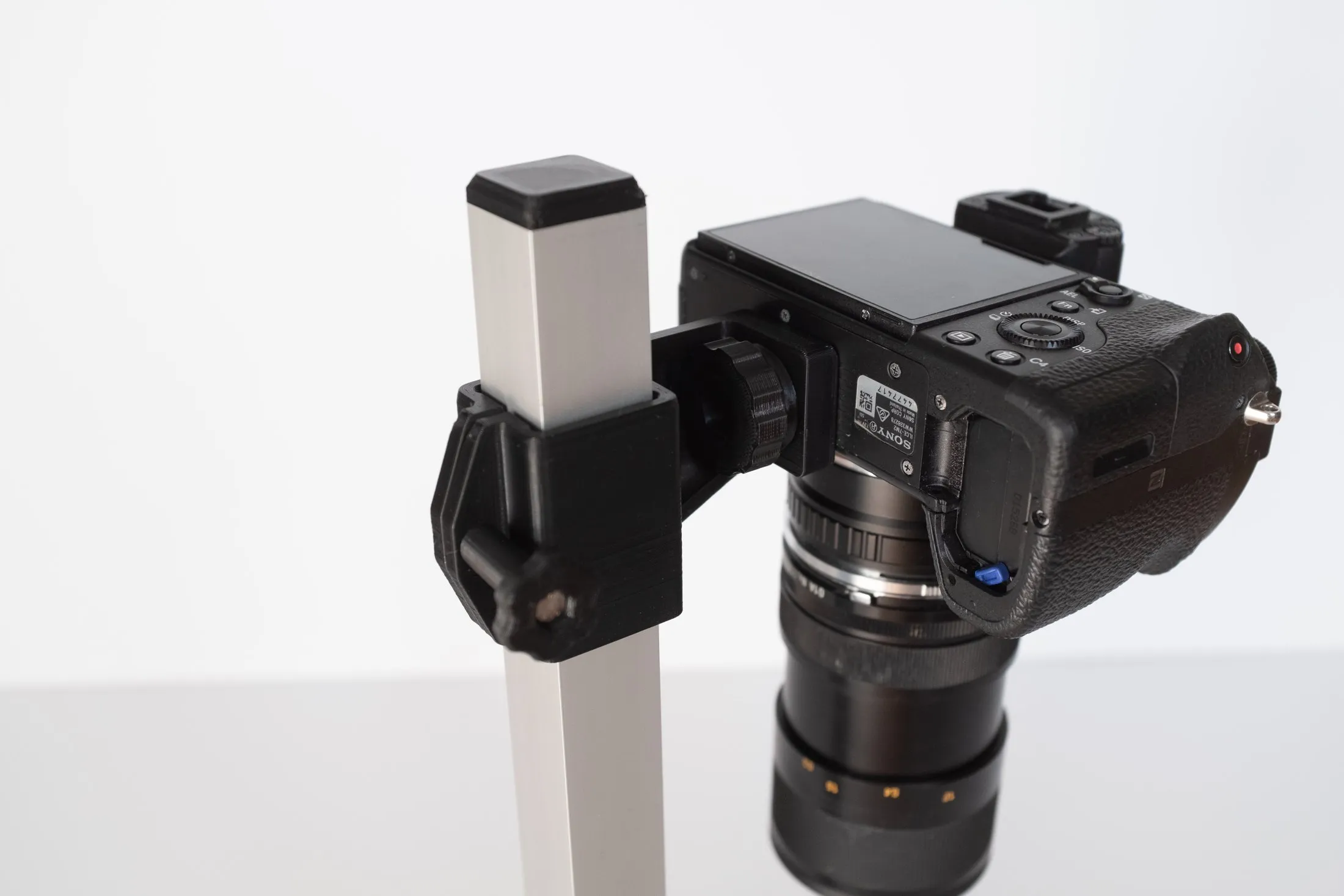
- Camera stand. An extruded aluminium column on a printed base, with a knob-locked height adjuster. The mount keeps the lens axis square to the film so frames stay sharp edge to edge.
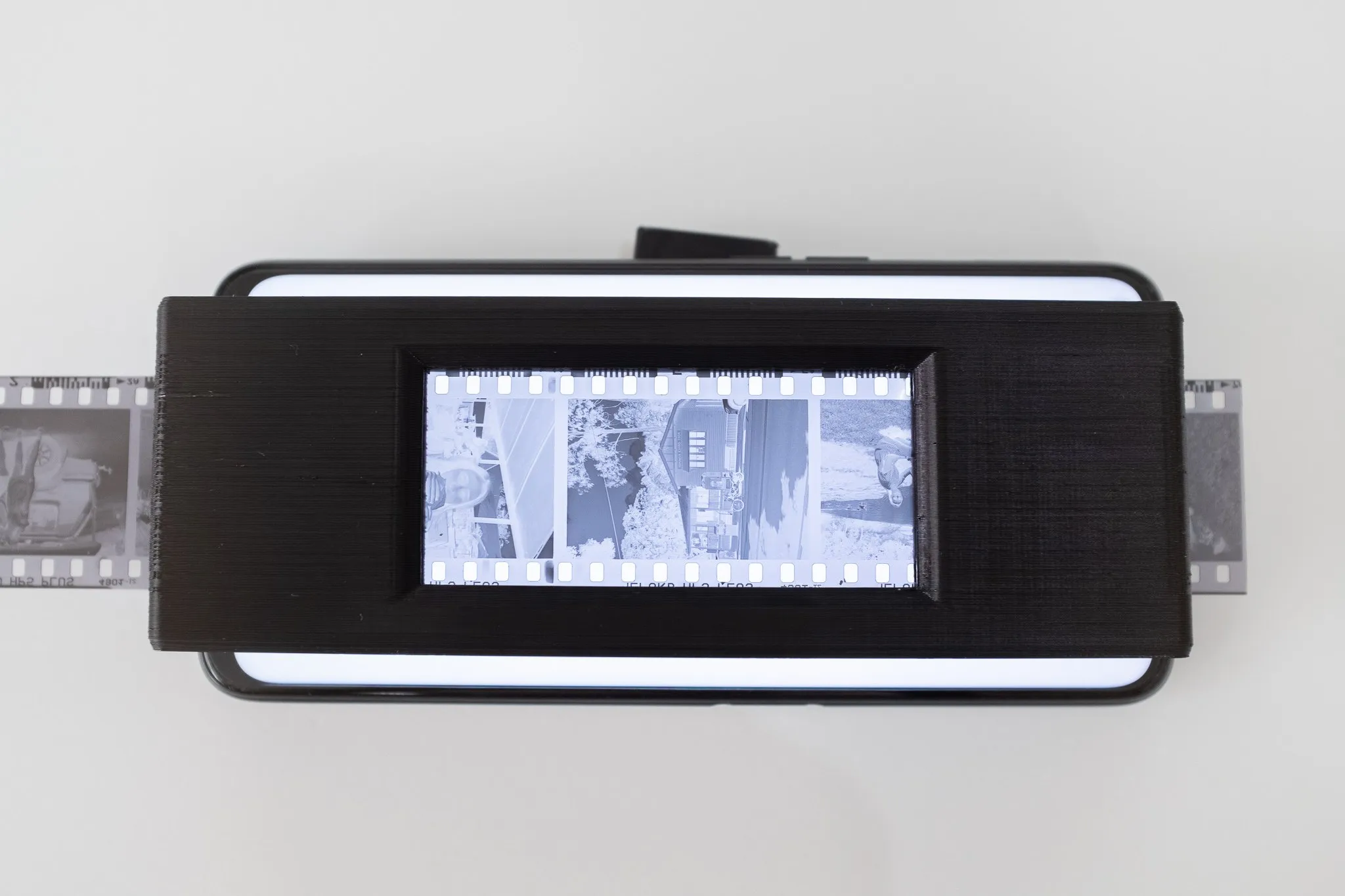
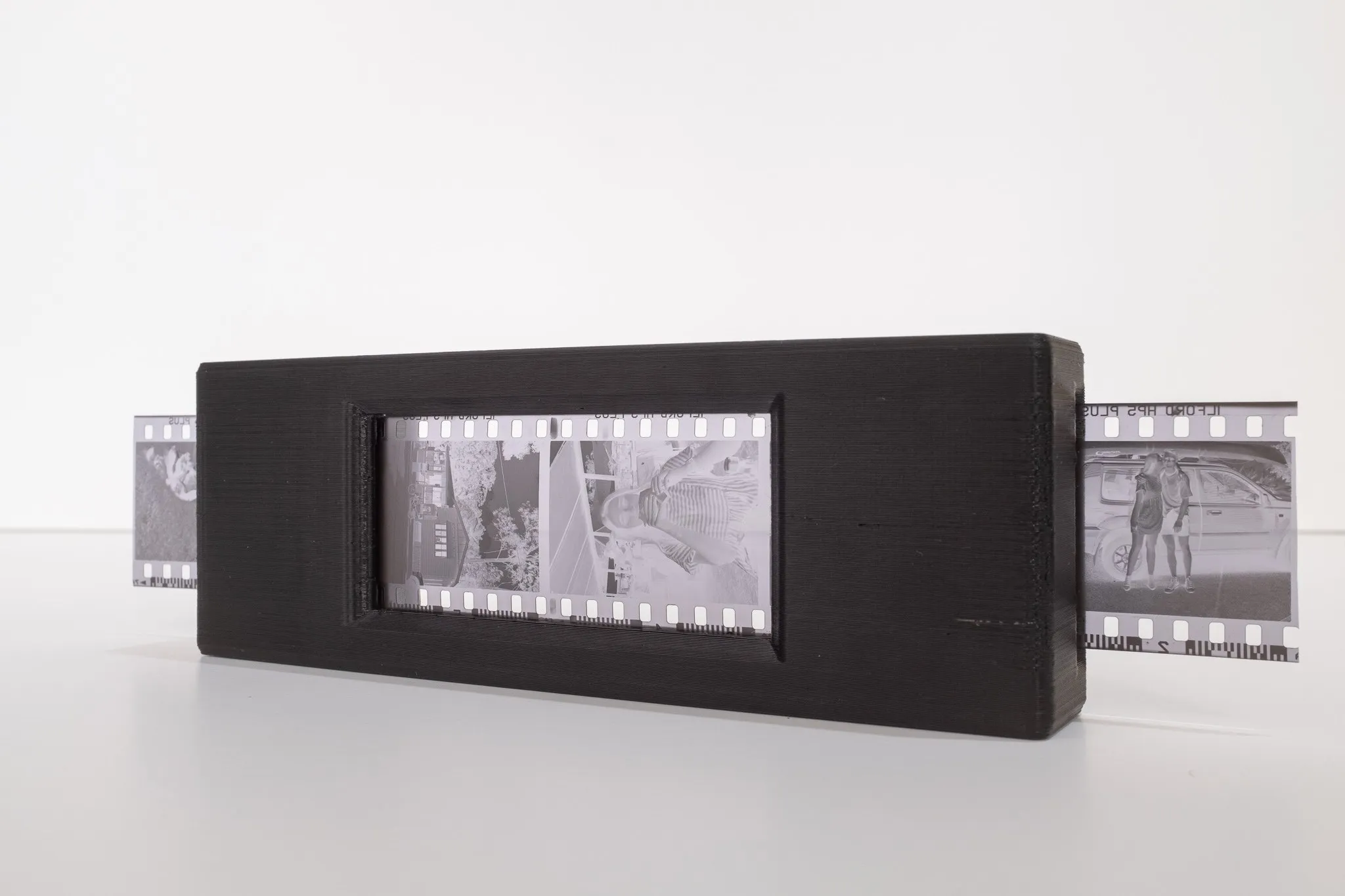
- 35 mm carrier. A flat film path with registered edge guides and a precise frame window. It went through seven revisions before production.
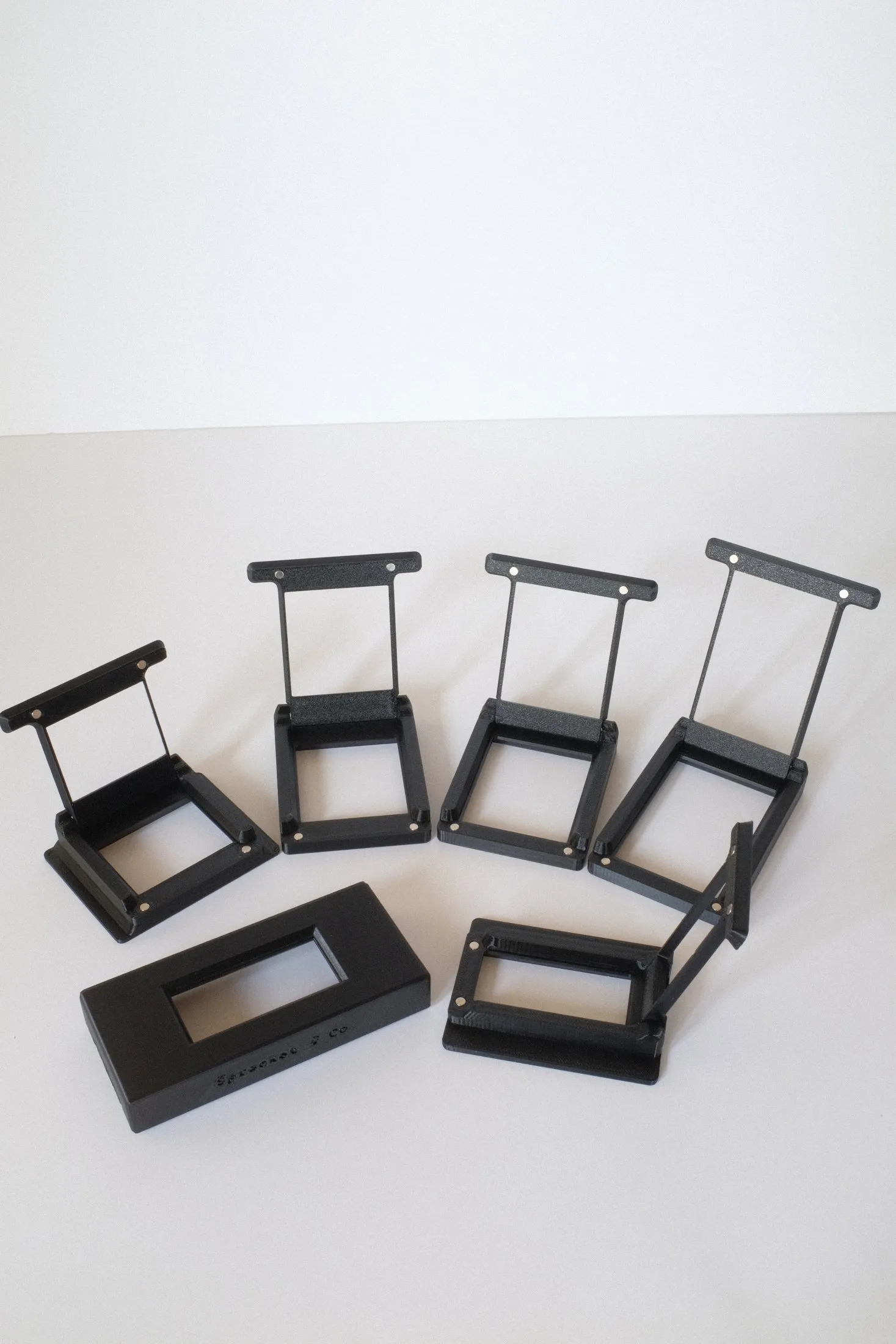
- Medium format carriers. One shared chassis with swappable inserts for 6×4.5, 6×6, 6×7 and 6×9. Four formats from one base frame kept the part count down.
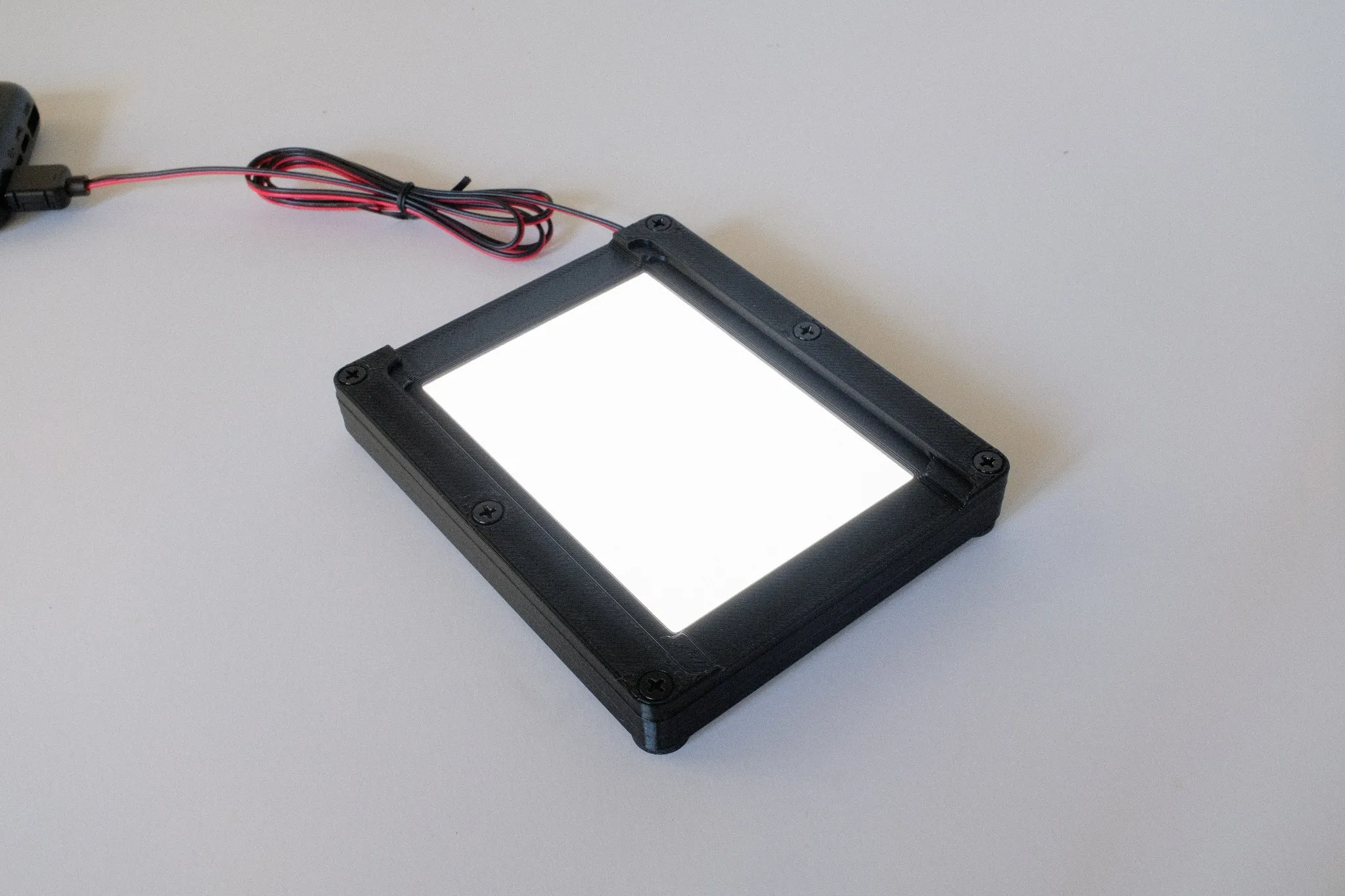
- Light panel. A two-plate enclosure with a diffusion stack that lights the whole frame evenly, without hot spots.
Designing for the printer
Every part was designed for FDM printing from the start. Geometry is self-supporting, wall thickness is tuned for stiffness against print time, and tolerances are dialled in against measured shrinkage on each machine.
Testing and iteration
The product grew from customer feedback. The first release was a camera stand that holds the lens square to the base, plus a 35 mm holder that keeps the film flat. Buyers then asked for 120 medium format, and next for an even, high-quality backlight. That led to an all-in-one kit in which a digital camera is the only thing the buyer supplies.
The 35 mm carrier went through seven revisions, each fixing one specific failure: film retention, fit with different cameras, print time, or film flatness across the gate. Every revision was re-sliced and re-qualified before it went into production.
Production
Production ran on the home print farm of Sovol SV06, Ender 3 V2 and Kingroon printers, on tuned Klipper firmware. Each machine had its own validated print file per product, so batches came out consistent.
As a one-person operation, the hardest part was scaling up. Every assembly and build step was timed and simplified so kits could be made quickly without loss of quality.
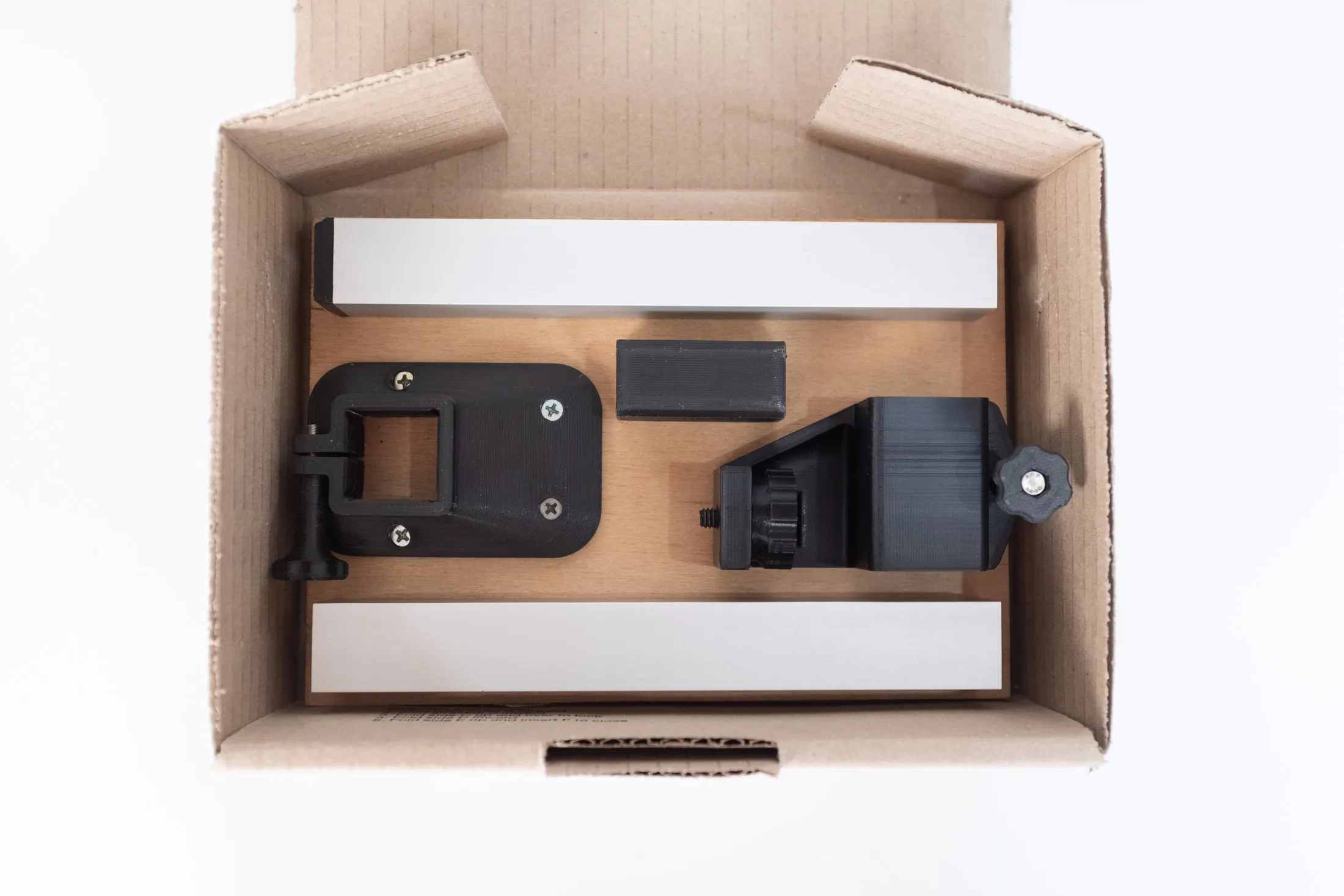
Materials were chosen per job: PETG for load-bearing parts such as the base, column bracket and mount clamp, and PLA where dimensional accuracy and surface finish mattered most. Outside suppliers covered the parts that weren’t printed, and lean, batch-based production kept overheads low.
I ran the business end to end: design, manufacturing, product photography, listings, packing, shipping and customer support.
Outcome
- More than 1,000 units sold through Shopify and Etsy, about 500 of them complete kits.
- A full camera-scanning system at a price hobbyists could afford.
- Five film formats served from one shared carrier design.
- Seven production revisions of the core carrier, each fixing a specific failure.
The business closed in 2025 when I moved into a full-time graduate engineering role. Its lasting lesson was in design for manufacture: when the designer is also printing, packing and answering customer emails, every extra part and fragile feature carries a direct cost.